CoderBunnyz vs Robot Turtles: An Honest 2026 Comparison
Robot Turtles pioneered the coding board game and is still the gentlest pick for pre-readers, if you can find it. An honest look at what each game teaches and who should buy which.
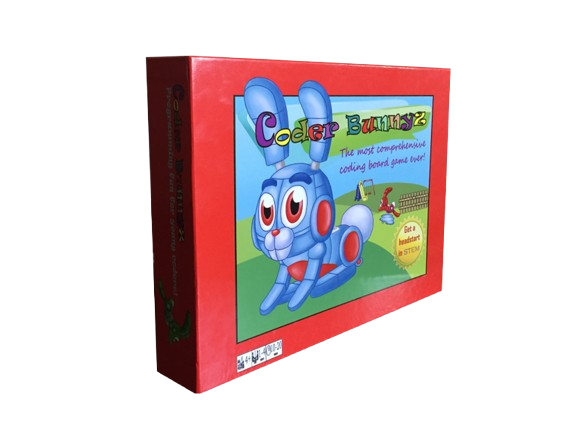
About $36 · 2 to 4 players · screen-free
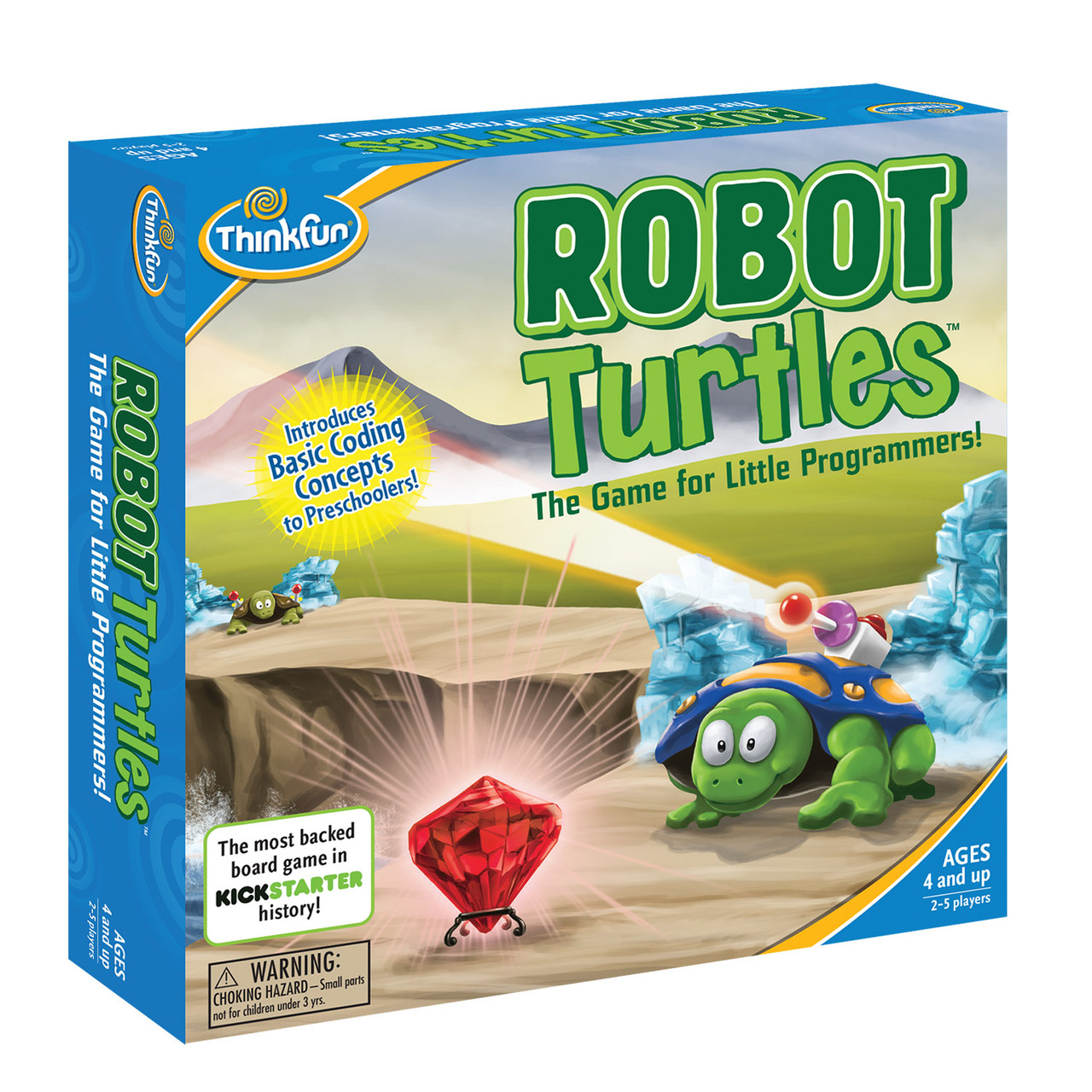
Ages 4 to 8 · 2 to 5 players · mostly secondhand in 2026
Who wrote this
This comparison is published by CoderBunnyz. We make one of the two games below, so read us as a knowledgeable but interested party. We have written it to be genuinely fair, including saying when Robot Turtles is the better pick. Ages, player counts and concepts come from each game’s box and public listings.
The short answer
Robot Turtles is the gentler, simpler game: if your child is 3 to 4 and pre-reading, and you can find a copy at a fair price, it is a genuinely good first pick. CoderBunnyz starts at the same “first sequence” level but adds conditionals, loops, functions and inheritance, so one ~$36 box keeps working for years and for mixed ages. The practical tiebreaker: Robot Turtles is largely out of print in 2026, so most families buying new end up with CoderBunnyz on availability alone.
When Robot Turtles is the better pick
- Your child is 3 or 4 and pre-reading: an adult plays the “Turtle Mover” while kids simply play cards. It is the gentlest on-ramp in the category.
- You want the simplest possible rules: one core idea (sequencing) taught brilliantly, with the Bug tile for undo and the Function Frog card as a light first taste of functions.
- You find a secondhand copy at a fair price and mainly want a preschool game, not a multi-year progression.
- You want up to 5 players: Robot Turtles seats 2 to 5, one more than CoderBunnyz.
When CoderBunnyz is the better pick
- You are buying new in 2026: CoderBunnyz is in print at about $36; Robot Turtles mostly is not.
- You want the game to last: after sequencing, CoderBunnyz introduces conditionals, loops, functions and inheritance, so a 10-year-old (or a parent) is still challenged.
- You have mixed ages at the table, since the same box works for a 4-year-old and an older sibling.
- You want a free curriculum: CoderBunnyz pairs with free lesson plans on this site for home or classroom use.
CoderBunnyz vs Robot Turtles at a glance
| CoderBunnyz | Robot Turtles | |
|---|---|---|
| Ages | 4 to 104 | 4 to 8 |
| Players | 2 to 4 | 2 to 5 |
| Screen-free | Yes | Yes |
| Concepts taught | Sequencing, conditionals, loops, functions, inheritance | Sequencing, debugging (Bug tile), a first look at functions (Function Frog) |
| Reading required | Helps for advanced cards; age 4 plays with an adult | None (built for pre-readers) |
| Grows with the child | Yes: 13 levels of play add concepts over years | Limited: most kids top it out by 6 to 8 |
| Availability (2026) | In print, ships today | Largely out of print; mostly secondhand |
| Price | About $36 new | Secondhand prices vary «FILL: verify current typical listing price» |
What each game actually teaches
Robot Turtles, created by Dan Shapiro and published by ThinkFun after a record-setting Kickstarter, teaches sequencing: kids play instruction cards to steer their turtle to a jewel while an adult executes the “program.” It is often undersold as “just sequencing,” but the Bug tile teaches undo-and-fix (a real debugging habit) and the Function Frog card introduces the idea of reusing a named group of moves. For 3-to-6-year-olds it is a genuinely well-designed first step. Its limitation is ceiling, not quality.
CoderBunnyz starts in the same friendly place (hop your bunny to the carrot) and then keeps adding concepts as kids are ready: conditionals, loops, functions, and inheritance. The trade-off runs the other way: it has more rules than Robot Turtles, so the youngest players need an adult at the table for the first games, and the advanced cards may sit unused for a year or two with a 4-year-old.
Where each game falls short
- Robot Turtles: hard to buy new in 2026, tops out around age 6 to 8, and stays at one concept level. A great start with a short runway.
- CoderBunnyz: needs at least two players (it is not a solo puzzle), an adult should learn the rules first, and a 4-year-old will not touch the advanced cards for a while.
Availability check before you decide
Robot Turtles has not been in regular production for several years, and most 2026 listings are secondhand. If you see it back in stock at a normal retail price (~$25 historically), the availability argument above disappears, so judge purely on age fit and depth. «FILL: verify Robot Turtles availability at major retailers at time of publishing»
CoderBunnyz is in stock today, ships fast, and teaches real coding from your very first hop.
Frequently asked questions
Is Robot Turtles or CoderBunnyz better for a 4-year-old?
Both start at age 4. Robot Turtles is slightly gentler for pre-readers because an adult executes the moves and the rules are minimal. CoderBunnyz starts almost as simply and lasts far longer. Since Robot Turtles is largely out of print, CoderBunnyz is usually the practical choice for a new purchase.
Is Robot Turtles still being sold in 2026?
Robot Turtles is largely out of print and no longer widely available new; most listings are secondhand at varying prices. Check current listings before ruling it out, since availability can change.
What does Robot Turtles teach?
Sequencing first and foremost, plus undo-and-fix debugging with the Bug tile and a first taste of functions with the Function Frog card. It does not go on to loops, conditionals, or inheritance the way CoderBunnyz does.
What is the closest in-print alternative to Robot Turtles?
CoderBunnyz is the closest like-for-like alternative: a screen-free coding board game that starts at age 4 with simple sequencing, and then goes further (loops, functions, inheritance). It costs about $36 and is in stock.
Keep reading
Comments
Be the first to comment.